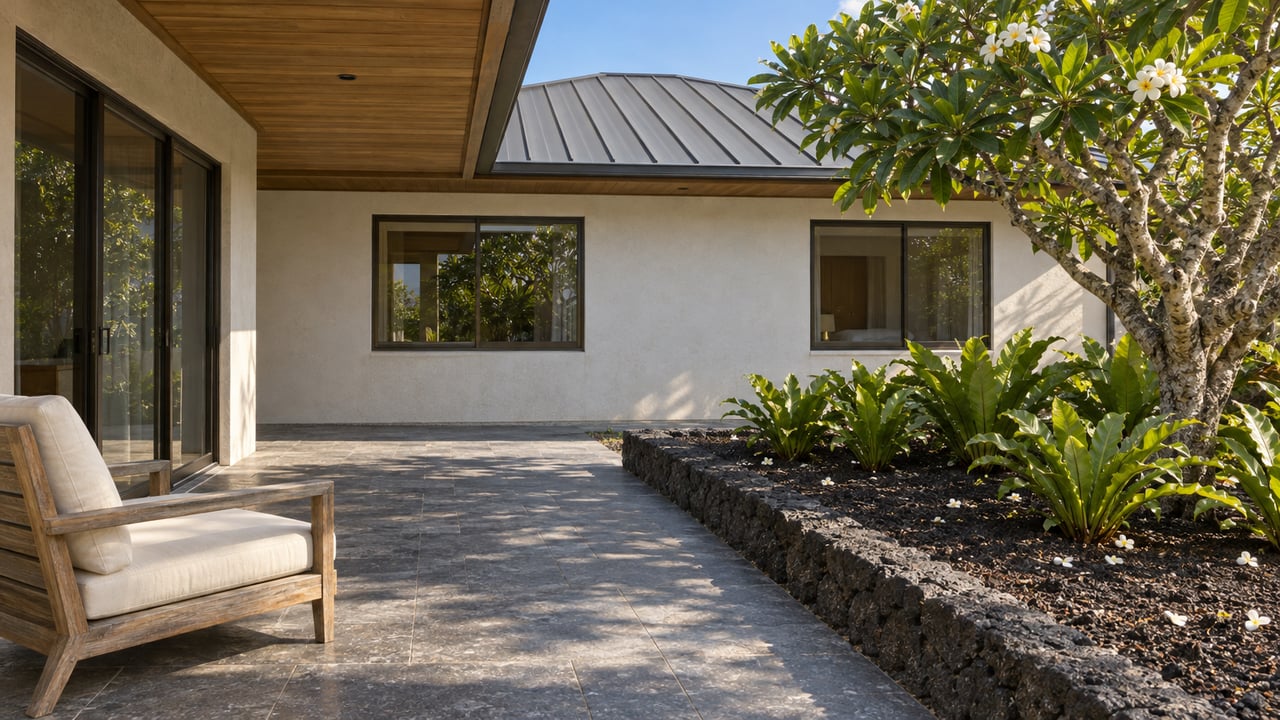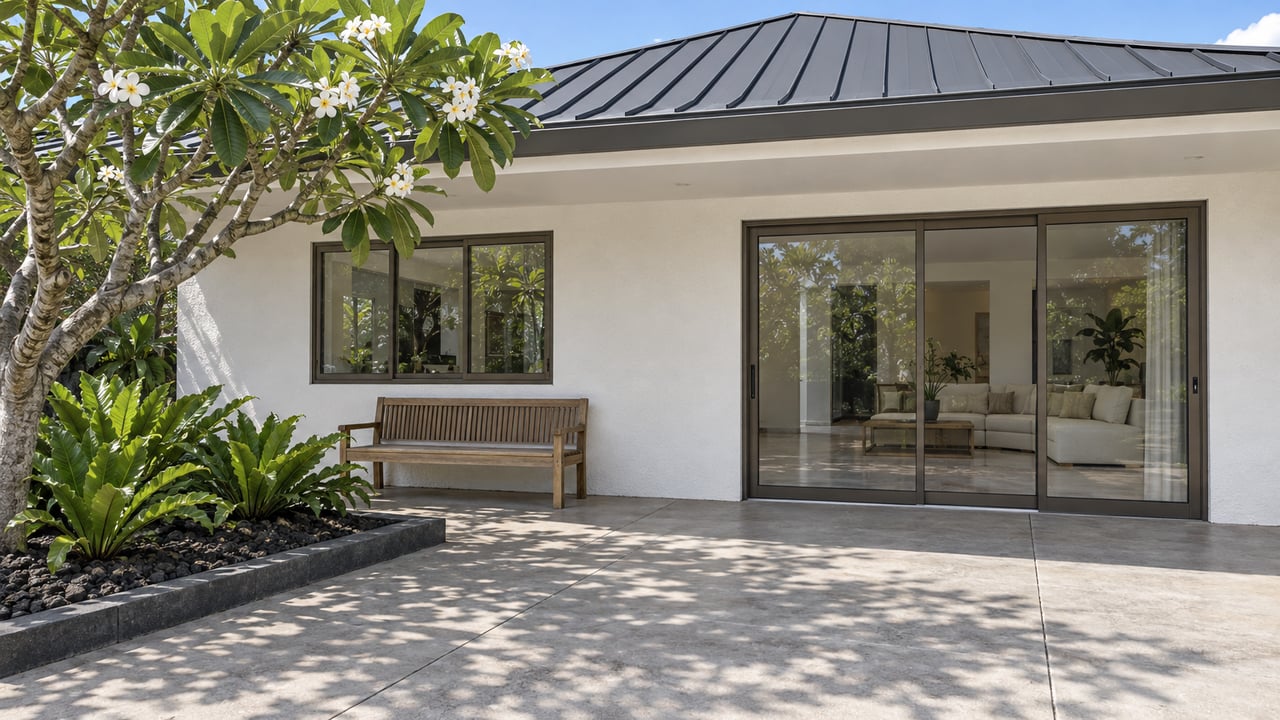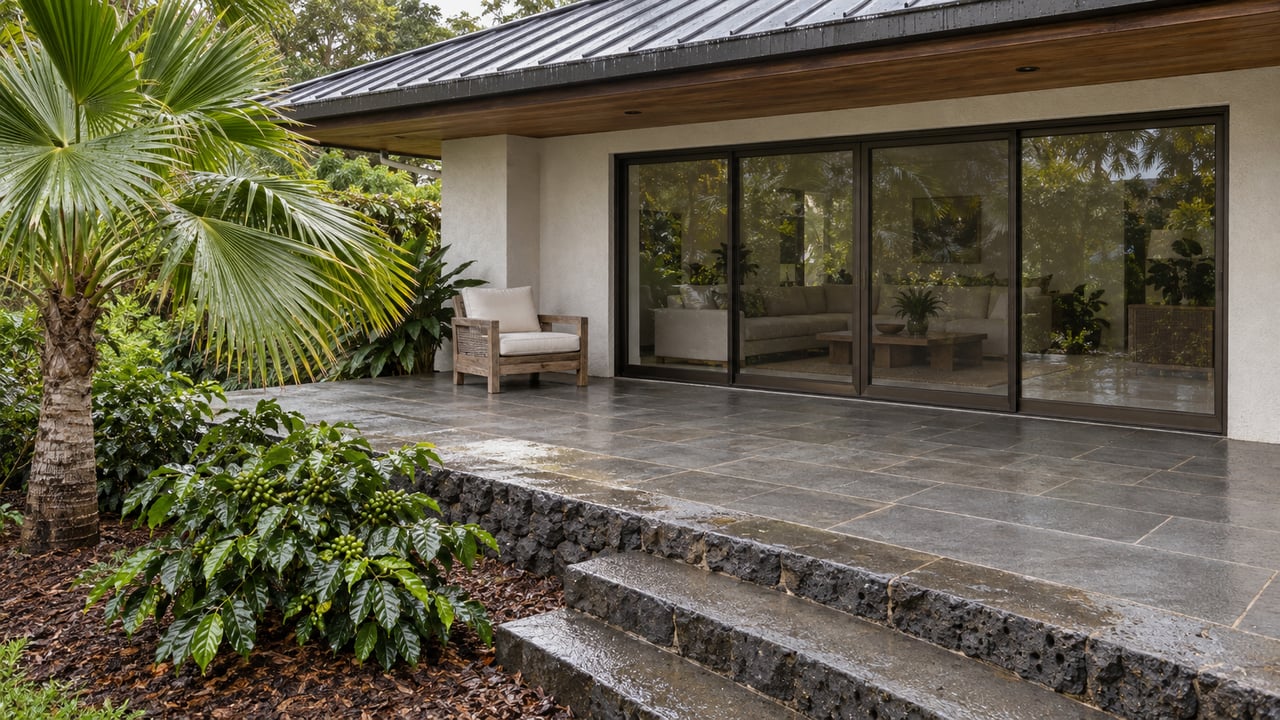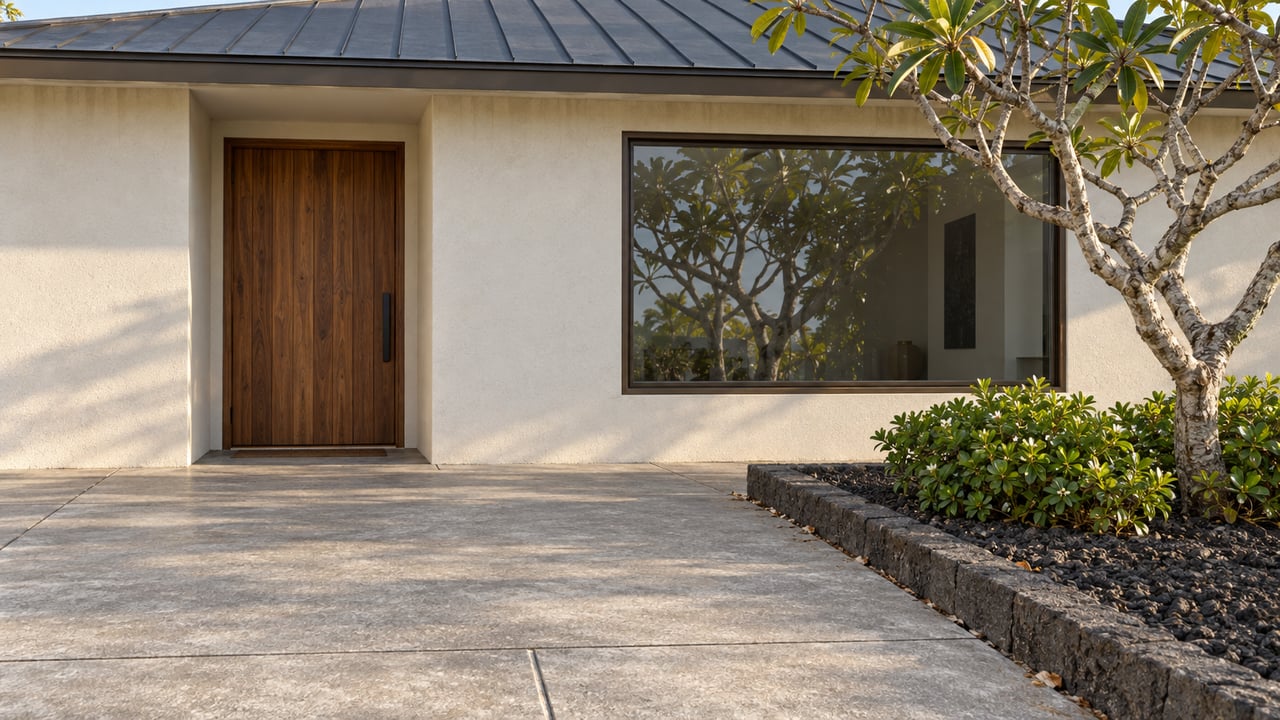
Two Waikoloa Beach Resort condos come across your desk on the same afternoon. Same bedroom count, same view corridor, same list price, roughly the same finish level. One goes under contract in nine days with a 25% down conventional buyer. The other sits, drops price twice, and eventually closes cash at a discount. The units were never really the same asset. The difference sat in a document neither buyer read at first showing: the building's master hurricane policy.
That gap is the story of the South Kohala condo market in 2026. Insurance did not merely get more expensive. It became the mechanism that decides which units can be financed at all, and by extension, which sellers reach the full buyer pool and which get pushed toward cash-only.
The rule that quietly runs the market
Every condo sale that uses a conforming mortgage runs through the same choke point. Primary lenders sell roughly 70% of their mortgages to Fannie Mae and Freddie Mac, and those buyers on the secondary mortgage market will not purchase loans for units in buildings that are not insured to their full replacement value, which effectively freezes the mortgage market for those properties and makes it impossible for owners to sell or refinance in the conventional way.
The mechanic is straightforward:
- The building's association buys a master policy that must cover 100% of replacement cost, including hurricane.
- If the hurricane layer falls short of full replacement, the building lands on lender blacklists.
- A blacklisted building can still trade, but only to buyers who do not need a conforming loan.
- Because primary lenders sell 70% of their mortgages to Fannie Mae and Freddie Mac, if units requiring a mortgage cannot be sold on the secondary market, the entire building may lose value as future sales may be limited to cash buyers.
That is the pricing pressure. Not headlines about premiums. The specific closing-table friction of a building slipping under 100% coverage.
Why so many buildings ended up on the wrong side of the line
Hawaii's admitted insurance market is thin to begin with. There are only three insurers in Hawaiʻi in the admitted or voluntary insurance market that place insurance on condo buildings. If an insurer in this market non-renews your building, you may need several excess or surplus lines insurers to write the coverage. Excess and surplus lines insurers are not licensed by the State of Hawaiʻi and the Hawaiʻi State Insurance Commissioner has no rate authority over those insurers, so they can charge more for coverage that no other insurer is willing to write.
When reinsurance costs jumped after 2023, that thin market snapped. Single-family homeowners have been hit with rate hikes of 30 to 100 percent, while some condo associations have seen staggering increases of 300 to 1,000 percent, along with policy non-renewals. Some AOAOs kept full coverage and passed the pain through as assessments. Others could not, and dropped their hurricane layer to whatever they could afford.
According to 2024 legislative testimony, between 375 and 390 condominium buildings in Hawaii were underinsured for hurricane risk. Faced with premium increases as high as 1,000 percent, many condo boards are being forced to underinsure their properties.
That is the origin of the two-track market. Fully insured buildings kept access to conforming buyers. Underinsured buildings quietly became cash-only real estate.
What Act 296 changed, and what it didn't
The state has moved. On July 8, 2025, Governor Josh Green signed Senate Bill 1044, now Act 296, into law. This act directly targets Hawaii's insurance market instability, especially the crisis in hurricane coverage for condos. The most consequential piece is the reactivation of the Hawaii Hurricane Relief Fund, sitting on roughly $170 million in reserves and available as an excess layer above the first $10 million of hurricane coverage.
For eligible buildings the savings can be meaningful. Some associations, even mid-sized, not just luxury towers, have reported up to 70% savings on their hurricane insurance through HHRF.
But eligibility is narrow, and the reader considering an offer needs to know the fine print:
- AOAO must be denied hurricane insurance by at least two state-licensed insurers. The building's insured value must exceed $10 million. HHRF coverage is hurricane insurance only and covers excess losses above $10 million. You need to buy primary coverage separately. Associations must apply through a licensed insurance producer.
- The law does not automatically lower insurance for everyone. Smaller or older condo buildings, or those able to find private coverage, may not benefit at all. Primary insurance, the first $10M, must still come from the open market, where rates remain high and options are limited. The law is aimed at average condo buildings, not luxury high-rises.
There is now a second lever as well. In May 2026 the Hawai'i Green Infrastructure Authority opened a state-backed loan program to help condominium associations pay for critical building repairs, providing direct loans to Associations of Apartment Owners for projects intended to reduce property risks and improve insurability, including fire safety upgrades, pipe replacement and roof repairs. New loan commitments under Act 296 funding may be made through June 30, 2027, and priority goes to associations already ready to build.
None of this is retroactive relief. It is a set of tools an AOAO board has to actively pull, and the ones that pull them first will re-enter the financeable tier first.
Reading the Q1 2026 numbers through this lens
Look at South Kohala's first quarter with the insurance mechanic in mind and the split makes sense.
At Waikoloa Beach Resort, the condo market was the clear standout of Q1 2026, with more sales, higher prices, and faster closings than the same period last year, a clean sweep that reflects sustained buyer demand for resort-area product. The $1,000,000 to $1,500,000 price band drove nearly half of all Q1 closings at the resort. Buyers in that range are engaged and moving when they find the right unit. Inventory is also concentrated: Fairway Villas at Waikoloa Beach Resort alone accounted for a significant share of available inventory, with more than 30 listings across all statuses since January 2025, the most of any single project at the resort.
That is not simply strong demand. It is qualified-buyer demand crowding into buildings that still clear the financing screen. Listing agents at Waikoloa Beach Villas, for example, have started foregrounding "one of the strongest reserve funds in the resort, a meaningful advantage for buyers looking to avoid future surprises," combined with approximately 68% vacation rental occupancy. Reserve health is now a marketing headline because it is a proxy for insurability.
Meanwhile Waikoloa Village, the workhorse residential submarket up the hill, tells a softer story. In February 2026 Waikoloa home prices were down 12.9% compared to last year, selling for a median price of $817K, and homes were selling after an average of 138 days on the market. On the condo side, the Waikoloa Village condo market saw steady transaction volume in Q1 with entry-level demand leading the way, and more than half of all closed sales came in under $500,000. Different buyer pool, different loan sensitivity, and buildings whose insurance costs matter proportionally more against a smaller unit value.
Zoom out to the broader South Kohala resort corridor and the discipline is visible: the broader South Kohala market, which includes the Kohala Coast resort communities of Waikoloa, Mauna Kea, and Mauna Lani, saw average sales prices rise to $1.99M, up 12% year-over-year, with total sales volume up 25% and sales above $1M up 17%. That said, the market is becoming more selective, with inventory up approximately 15% compared to Q1 2025, days on market increasing, and price reductions appearing more frequently. With mortgage rates hovering around 6.36% as of mid-May, financeable inventory is where the mortgage-dependent buyer is willing to compete. Everything else negotiates.
What a buyer should ask before writing an offer
Before you fall in love with a unit at Fairway Villas, The Shores, Elima Lani, or anywhere else on the coast, ask the listing agent for the following in writing:
- The current master policy declarations page, showing hurricane and non-hurricane limits alongside the building's insured replacement value.
- Whether the AOAO has any surplus-lines layers, and at what premium.
- The two most recent years of AOAO budgets and any special assessments passed or pending.
- The reserve study, and specifically the funded percentage.
- Whether the association has applied for, or been approved for, HHRF excess coverage or the Condominium Association Loan Program.
- Any lender warrantability letters the AOAO has received recently, which is how you find out fast whether Fannie or Freddie has flagged the building.
If a seller cannot produce those, that itself is data.
What a seller in a compromised building can still do
If your building is on the wrong side of the coverage line right now, the answer is not simply to price down until a cash buyer appears. It is to work with the board on the tools that exist. Applications for HHRF are being accepted, and the state condo loan program is designed precisely to fund the repairs, roof, plumbing, fire safety, that make a building insurable again. The building that resolves its master policy in the next twelve months will re-enter the conforming buyer pool while others are still cash-only.
FAQ
Does this affect single-family homes in South Kohala too? The mortgage-blacklist mechanic is specific to condos, but the insurance tightening has bled outward. Condo insurance may grab the headlines, but single-family homeowners are feeling it too, with more scrutiny on roofs and systems, and, in some cases, outright policy non-renewals.
Is the reinsurance market getting better? Modestly. As of late 2025, reinsurance rates have recently begun to stabilize, not returning to pre-2023 levels, but no longer spiking, and combined with new initiatives from the Hawaiʻi Legislature and state agencies, this trend may help reduce future premiums and provide support for buildings needing major repair or maintenance.
Is hurricane coverage the whole cost story? No. Hurricane insurance represents only half the cost equation; the other half comes from non-hurricane insurance, both of which condos are required to maintain. A building can be fully hurricane-insured and still be squeezed by the non-hurricane side.
If you are weighing an offer at Waikoloa Beach Resort, Mauna Lani, or anywhere along the Kohala Coast, the master policy is now part of the property. We read those documents with our clients before emotion enters the room. To talk through a specific building, or to get a straight read on where your own unit sits in this market, Kona Pacific Realty is here. Get your free home valuation or connect with your Kailua‑Kona agent, me ke aloha pumehana.