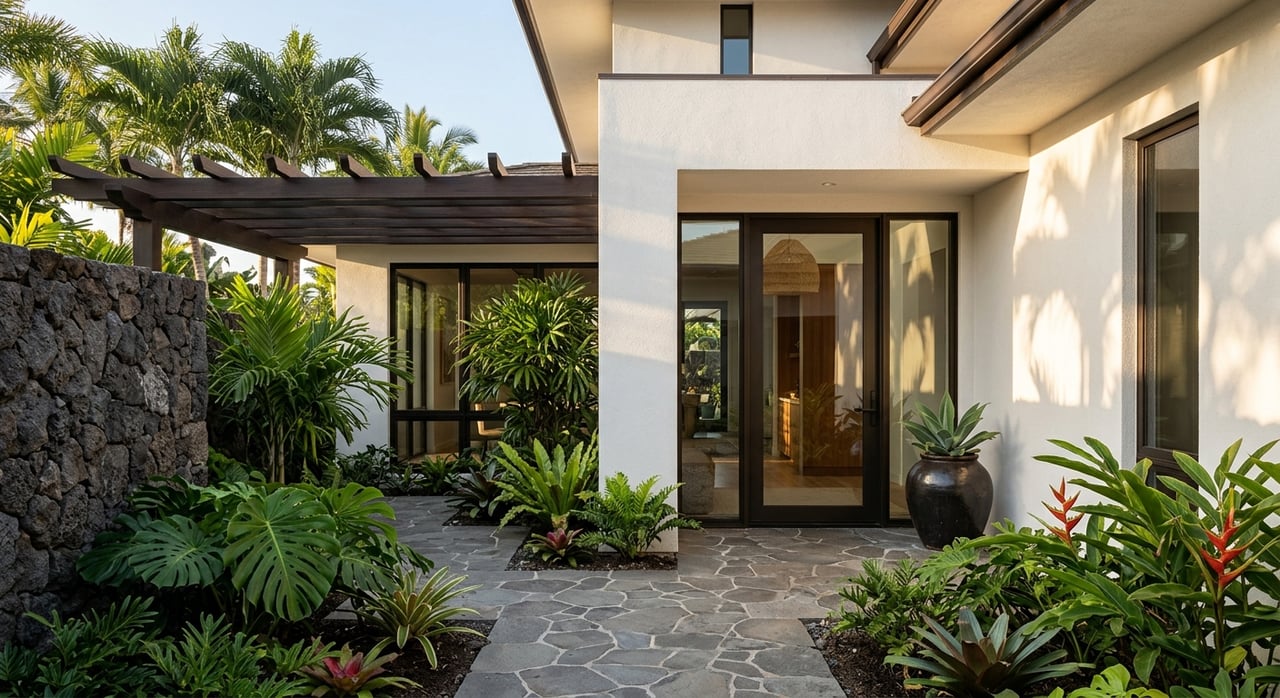
Wondering whether a South Kohala property can really work as a short-term rental? That question is about much more than beach proximity or a strong nightly rate. If you are considering a condo or home in places like Waikoloa, Mauna Lani, Puakō, Kawaihae, or Waimea, you need to look at legality, taxes, seasonality, and management before you get attached to the income story. This guide will help you evaluate the key factors so you can make a more confident decision. Let’s dive in.
Start With Legal Use
In South Kohala, the first question is simple: is the property legally allowed to operate as a short-term rental today? Hawaiʻi County rules are the main filter, and they can quickly separate a strong opportunity from a risky one.
According to Hawaiʻi County short-term rental code provisions, short-term vacation rentals are allowed in certain districts, including V, CG, and CV, in residential and commercial districts located in General Plan Resort and Resort Node areas, and in RM multiple-family condominium units. That is why many of the strongest STR candidates in South Kohala tend to be in the resort-oriented condo communities around Waikoloa Beach and Mauna Lani.
Even when zoning appears to allow STR use, that does not end the review. County code makes clear that private covenants can still prohibit short-term rentals. In practical terms, that means HOA rules, condo declarations, CC&Rs, and house rules may block rentals even if the county would otherwise permit them.
Check Registration and NUC Status
Registration is another critical step. Under county rules, short-term rentals that existed on or before April 1, 2019 had a path to register, and units outside permitted zoning may continue only if they secured a Nonconforming Use Certificate, often called a NUC.
For newer rentals established after April 1, 2019, the county requires registration before use. The property must also have final building, electrical, and plumbing approvals, along with proof of state tax licenses, a site plan, parking verification, and confirmation that county property taxes are current. If a property is being marketed as an STR investment, these documents should be part of your due diligence file, not an afterthought.
A buyer should verify whether the unit is:
- A currently permitted STR in the proper zoning
- A legal nonconforming STR with a valid NUC
- Not eligible for STR use at all
That single answer can shape the property’s value more than décor, views, or even historical rental performance.
Don’t Ignore Operating Rules
Some buyers focus on zoning and stop there. That can be a mistake because daily operating rules affect how workable the property will be once you own it.
Hawaiʻi County requires the owner or a reachable contact person to live in Hawaiʻi County and be reachable 24 hours a day, 7 days a week. The code also requires quiet hours from 9:00 p.m. to 8:00 a.m., onsite designated parking for guests, and use of the registration or NUC number in advertising. For buyers who do not live on island full time, the local response plan matters a great deal.
This is why management should be part of your underwriting. If the property needs strong local oversight to stay compliant, that is not just an operational detail. It is part of the asset itself.
Know Why Resort Areas Stand Out
South Kohala includes a wide geographic area, but not every location performs the same way for visitor demand. The strongest demand tends to cluster in established resort environments where amenities are easy to access and the guest experience feels complete.
The South Kohala Community Development Plan area includes Kawaihae, Puakō, Waikoloa, and Waimea. Within that larger district, coastal resort communities and condo regimes around Waikoloa Beach and Mauna Lani often stand out because they combine legal pathways with the kinds of amenities travelers actively seek.
At Waikoloa Beach Resort, official resort materials highlight access to ʻAnaehoʻomalu Bay, shopping centers, golf, and weekly market activity. Official Mauna Lani resort and golf offerings emphasize ocean-view golf, tennis, a sports club, spa services, dining, and beach access connected to the Great Lawn. That type of amenity mix can support guest interest in ways that a less service-rich location may not.
Build a Monthly Revenue Model
A common underwriting mistake is using one annual occupancy number and assuming it tells the full story. On Hawaiʻi Island, vacation rental demand changes throughout the year, so your revenue model should reflect real seasonality.
According to official Hawaiʻi vacation rental performance reporting for February 2025, occupancy for the Island of Hawaiʻi segment was 63.0% in that month. In official reporting for later periods, occupancy was 42.8% in July 2025 and 51.6% in December 2025, showing that month-to-month swings can be meaningful.
That matters because a property that looks great on a blended annual average may feel very different in lower-demand months. A better approach is to estimate revenue month by month using realistic occupancy and average daily rate assumptions, then test whether the property still performs when the slower months arrive.
It is also important to understand the limits of the public data. The Hawaiʻi Tourism Authority reports note that the vacation-rental dataset does not distinguish between permitted and unpermitted units, and it does not include hotel or timeshare inventory. In addition, DBEDT coverage in the December 2025 report represented about 34.4% of estimated unique vacation rental properties in Hawaiʻi County. That makes the reports useful for directional demand trends, but not a substitute for true property-level comps and local market insight.
Model Taxes the Right Way
If you are evaluating STR potential in South Kohala, taxes deserve close attention. Short-term rentals in Hawaiʻi are taxable businesses, and the tax load can materially change your net income.
The Hawaiʻi Department of Taxation Tax Facts explain that short-term rentals are subject to both the General Excise Tax and the Transient Accommodations Tax. The same source notes that the state TAT was listed at 10.25%, with Act 96 raising the state TAT to 11.00% effective January 1, 2026. Hawaiʻi County also levies its own 3% county TAT, and GET still applies at 4% plus the 0.5% county surcharge.
Another key point is that taxes are not calculated only on the nightly rent. The Department of Taxation says gross rental proceeds for TAT include mandatory cleaning or housekeeping fees, management fees, and mandatory resort fees. If you model taxes too narrowly, your projected cash flow may look stronger on paper than it does in reality.
Include the Full Cost Stack
A realistic STR pro forma in South Kohala usually needs to account for more than taxes and mortgage costs. In many resort or condo communities, the recurring expense stack is wide, and small omissions can distort your expectations.
Your analysis should typically include:
- State and county lodging taxes
- General Excise Tax
- HOA or condo dues
- Property management
- Utilities
- Insurance
- Pool and landscape care, if applicable
- Furniture, linens, and replenishment
- Repairs and maintenance
- Replacement reserves
- Periodic compliance-related costs
If you are buying in a resort-style setting, management quality and upkeep can directly affect reviews, occupancy, and long-term condition. A property that looks attractive at first glance may not produce the returns you expect once these costs are fully loaded.
Use a Practical Buyer Framework
For many buyers, the easiest way to stay grounded is to follow a simple diligence framework. The goal is to confirm that both the demand story and the compliance story work at the same time.
A practical review for South Kohala often looks like this:
- Confirm legal use by TMK, zoning, and HOA or condo documents.
- Verify whether the property is a permitted STR, has a valid NUC, or is not eligible.
- Build a monthly revenue model using realistic local assumptions.
- Subtract taxes and operating costs based on gross revenue, not just room rate.
- Stress-test for slow months and higher-than-expected repairs or management fees.
- Confirm who will be the county-reachable contact person.
- If shoreline-area renovations are planned, check coastal and Special Management Area requirements before closing.
This kind of process can help you avoid buying based on marketing language alone. In a market like South Kohala, confidence usually comes from paperwork, numbers, and local context lining up together.
Ask Better Questions Before You Buy
If you are serious about a South Kohala short-term rental candidate, your due diligence questions should be specific. Broad questions like “Will it rent?” are not enough.
Instead, ask:
- Is the property legally allowed to operate as an STR right now?
- Do the governing documents restrict short stays?
- What is the true all-in tax burden?
- Who will handle 24/7 local response requirements?
- What does the property look like in lower-occupancy months?
- Does the investment still make sense if rules tighten further?
That last point matters. Hawaiʻi County continued studying STR impacts in 2025, so buyers should think not only about current rules but also about how resilient the investment would be if policy changes over time.
The Best STR Buys Balance Demand and Compliance
In South Kohala, resort location can absolutely be an advantage. Areas near Waikoloa Beach and Mauna Lani may offer the kind of amenities and visitor appeal that support strong guest interest, especially when paired with the right condo regime or zoning.
But demand alone is not enough. The best opportunities are usually the ones where zoning, association rules, tax planning, operating costs, and local management all align cleanly. When those pieces fit together, you are not just buying a property with rental appeal. You are buying a property with a clearer path to sustainable use.
If you are comparing South Kohala condos, second homes, or investment properties, Kona Pacific Realty, LLC can help you evaluate the local market with the kind of island-grounded perspective that supports better decisions.
FAQs
What makes a South Kohala property a strong short-term rental candidate?
- A strong South Kohala STR candidate usually has a clear legal path for rental use, no blocking HOA or condo restrictions, resort-area demand drivers, and a workable plan for taxes, management, and seasonal cash flow.
What zoning allows short-term rentals in South Kohala?
- Hawaiʻi County code allows short-term vacation rentals in V, CG, and CV districts, in residential and commercial districts within General Plan Resort and Resort Node areas, and in RM multiple-family condominium units, subject to all applicable rules.
What is a Nonconforming Use Certificate for a Hawaiʻi County STR?
- A Nonconforming Use Certificate, or NUC, allows certain existing short-term rentals outside currently permitted zoning to continue operating if they qualified under county rules.
What taxes apply to a South Kohala short-term rental?
- South Kohala STRs are generally subject to the state Transient Accommodations Tax, Hawaiʻi County’s 3% county TAT, and General Excise Tax including the county surcharge, based on the Department of Taxation guidance in the research sources.
Why should buyers use monthly occupancy assumptions for Hawaiʻi Island rentals?
- Hawaiʻi Island vacation rental occupancy can vary notably by season, so monthly underwriting gives you a more realistic view of income and helps you test slower periods.
What documents should buyers review before buying a South Kohala STR?
- Buyers should review zoning, TMK-related property details, HOA or condo documents, STR registration or NUC records, tax registration status, parking compliance, and any approvals relevant to the current or planned use.