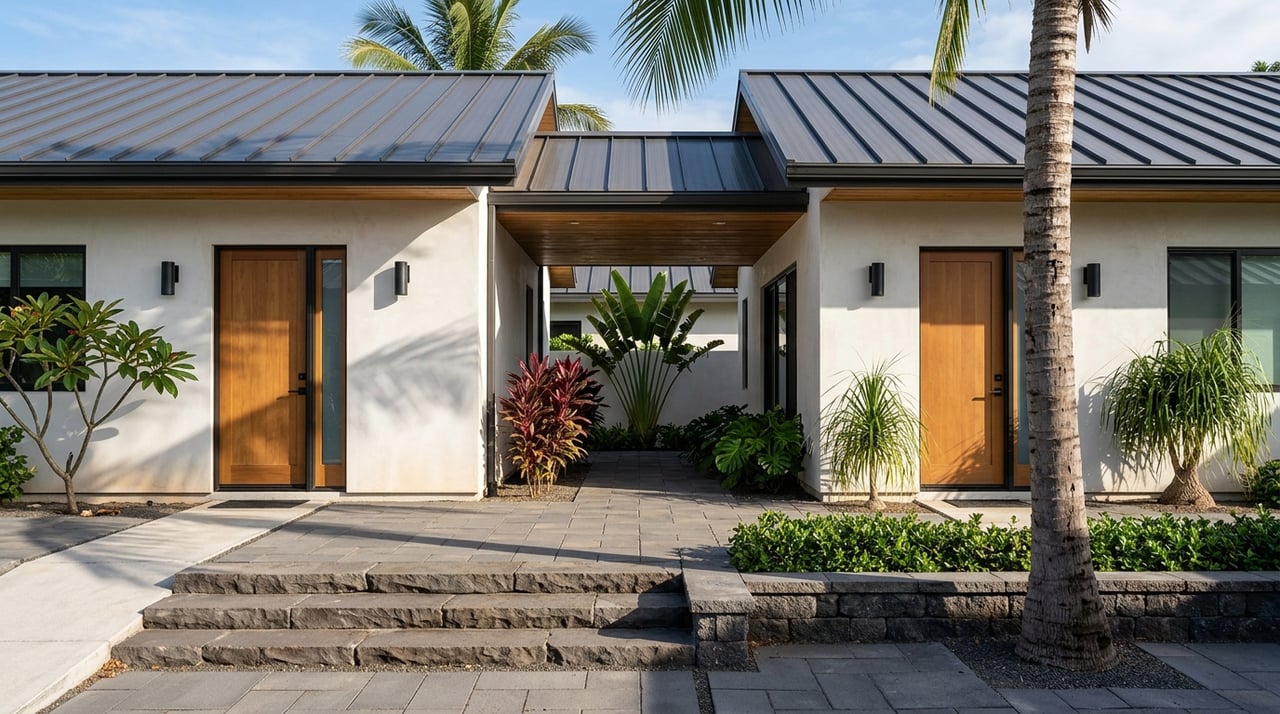
If your household needs space for parents, adult children, long-term guests, or a live-nearby support setup, South Kona can open up more possibilities than you might expect. But in this part of Hawaiʻi Island, multi-generational living is never just about bedroom count. Zoning, parking, water, wastewater, and private subdivision rules can all shape what a property can realistically support. Let’s dive in.
Why South Kona fits many households
South Kona covers a large area, and that matters when you are searching for a home that can work for more than one generation. According to the 2024 Census profile, South Kona had 9,789 residents, 4,217 housing units, and 3,219 households across 329.5 square miles.
That wide footprint means two properties in the same general area can function very differently. One parcel may have room for separate living space and parking, while another may face tighter site conditions, shoreline rules, or infrastructure limits. In other words, a good multi-generational fit in South Kona usually comes down to parcel-specific details.
Multi-generational property options
Single-family lots with extra space
Some South Kona homes may support a second living area through an existing guest house, an accessory dwelling unit, or more than one dwelling where zoning and lot size allow it. In Hawaiʻi County’s RS district, the code allows one guest house in addition to a single-family dwelling, allows an accessory dwelling unit, and may allow more than one single-family dwelling if minimum land area is met.
In the RD district, the code allows accessory dwelling units and may allow more than one double-family dwelling or more than two single-family dwellings on the same site if land-area minimums are met. In the RA district, accessory dwelling units are also allowed, and on smaller parcels some yard and height standards can shift to the RS standard.
For buyers, this creates a useful starting point. A home with detached living space, a flexible floor plan, or enough usable land may be worth a closer look, but the next step is always to verify what the specific parcel allows.
Rural and agricultural parcels
If your goal is more separation between households, more privacy, or room for gardens and agricultural use, rural and agricultural parcels may offer a different kind of multi-generational setup. In the FA district, Hawaiʻi County says one single-family or one farm dwelling is allowed, and accessory dwelling units are allowed.
The code also states that additional farm dwellings in FA districts require a farm dwelling agreement plus a farm plan. On A districts, an accessory dwelling unit is allowed, while additional farm dwellings must be tied to agricultural use and documented with a farm plan.
That distinction is important. A larger agricultural parcel can look ideal for extended family living, but not every extra structure can be used the same way. You want to confirm whether a second unit is an ADU, a farm dwelling, or something else entirely before you make plans.
What to notice in listings
Clues that a property may work
A listing can tell you a lot before you ever schedule a showing. Hawaiʻi County’s ohana permit application works like a practical buyer checklist because it calls for a scaled plot plan showing all existing and proposed structures, detached garages, water catchment, driveways, private sewage disposal systems, and two additional parking spaces for the new unit.
If a listing already shows clear site layout, visible parking areas, separate entrances, detached improvements, or existing utility features, it may be easier to picture as a multi-generational property. That does not replace due diligence, but it can help you spot stronger candidates early.
Questions worth asking early
Before you get too attached to a property, ask practical questions that match how your household plans to live. Common issues in South Kona include whether the second dwelling is already permitted, whether there is enough parking and driveway room, what zoning and State Land Use layers apply, whether private rules add extra limits, and whether the property is served by county water, catchment, or a wastewater system that can support the intended use.
These questions matter because layout alone does not tell the full story. A property can look perfect for extended family on paper and still need permit review, infrastructure upgrades, or private-rule confirmation.
Permits and approvals to understand
County departments have different roles
In Hawaiʻi County, the Planning Department handles land-use approvals such as ohana and farm dwellings, while Public Works issues building permits. That means a multi-generational project may involve more than one review path, depending on what already exists and what you hope to add or change.
The County’s land-use permit guidance specifically flags an ohana dwelling permit for a second home on residential property, an additional farm dwelling agreement for farm-worker housing on agricultural property, and a Special Management Area use permit for near-coastal development. If a home is close to the shoreline or located on agricultural land, those details can become especially important.
Private rules can still apply
Even when county code appears to allow a use, subdivision CC&Rs and HOA bylaws can be stricter. Hawaiʻi County specifically notes that a project can be zoning-compliant and still face private restrictions.
For buyers, this is one of the easiest issues to overlook. If a property is in a subdivision or planned community, you want to review private rules early, not after you have already built your plans around a second unit or expansion.
Water and wastewater checks matter
Wastewater can affect your plans
In South Kona, wastewater is a major part of multi-generational due diligence. The Hawaiʻi Department of Health says all cesspools must be replaced by 2050, and modifications that add bedrooms, bathrooms, kitchens, or otherwise increase wastewater flow can trigger a review or upgrade requirement.
DOH also says cesspools cannot serve new buildings. So if you are thinking about adding space for family, converting part of a home, or legalizing an existing second living area, wastewater capacity may become a key factor very quickly.
County water versus catchment
Water service can also vary a lot from property to property. The County’s 2024 water-quality report says the South Kona Water System is supplied by Ke‘ei Wells A-D and Haleki‘i Well, while the Department of Water Supply notes that many residents outside the public system rely on rainwater catchment, which DWS does not regulate.
That means you should not assume every South Kona property has the same utility setup. For a multi-generational household, understanding whether a home is on county water or catchment can help you think through daily use, maintenance, and future improvements.
Mauka versus makai living choices
Makai lifestyle tradeoffs
Makai areas may appeal to households that want easier access to the coast and ocean views. At the same time, Hawaiʻi County’s South Kona shoreline guide notes that the coast often includes seasonal high surf, strong currents, rocky footing, and at some access points limited parking or no facilities.
For multi-generational households, those conditions can influence day-to-day convenience. If older family members, caregivers, or young children are part of your household, ease of access and mobility may matter just as much as proximity to the water.
Mauka practical advantages
Mauka areas may be a better fit if you want more privacy, a compound-style layout, or space for agricultural use. In these areas, the questions often shift away from beach access and toward driveway access, slope, water source, and wastewater capacity.
That is why location in South Kona is not just about scenery. It is also about how a property supports your household’s routines, transportation needs, and long-term plans.
A smart way to shop for flexibility
When you are buying for more than one generation, it helps to think in layers. Start with the living arrangement you want today, then look at how the property could support future changes like caregiving, adult children living at home, or long-term guests.
A strong South Kona property often checks several boxes at once:
- Flexible layout with separation between living spaces
- Zoning that supports the current or intended use
- Room for parking and safe access
- Water and wastewater systems that match the plan
- Clear permitting history for any second unit or added space
- No private subdivision or HOA rules that block the setup
This kind of search takes more than a quick online filter. It usually takes local knowledge, careful property review, and the discipline to verify details before you move forward.
South Kona offers real possibilities for households that want to live together while keeping some independence. The key is finding a property that works not only for your family, but also for the land, infrastructure, and rules attached to that specific parcel.
If you are exploring multi-generational living in South Kona, a local, parcel-by-parcel approach can save time and help you make a more confident decision. The team at Kona Pacific Realty, LLC is here to help you evaluate homes, acreage, and neighborhood options with practical local insight and warm, personalized guidance.
FAQs
What types of South Kona properties can support multi-generational living?
- In Hawaiʻi County, some RS, RD, RA, FA, and A zoned properties may allow features such as accessory dwelling units, guest houses, or additional dwellings when code requirements are met, but the exact options depend on the specific parcel.
What should you check before buying a South Kona home for extended family?
- You should confirm zoning, State Land Use layers, permit history, parking and driveway layout, water source, wastewater system capacity, and any subdivision CC&Rs or HOA rules that may add restrictions.
Can a cesspool affect a multi-generational housing plan in South Kona?
- Yes. The Hawaiʻi Department of Health says all cesspools must be replaced by 2050, and changes that add bedrooms, bathrooms, kitchens, or wastewater flow can trigger review or upgrade requirements.
Is county water available everywhere in South Kona?
- No. Some properties are served by the South Kona Water System, while many homes outside the public system rely on rainwater catchment.
What is the difference between mauka and makai areas in South Kona for multi-generational households?
- Makai properties may offer shoreline access but can come with coastal safety and access considerations, while mauka properties may better suit households looking for privacy, more land, or agricultural space, with practical focus on slope, driveway access, water, and wastewater.
Do private subdivision rules matter if county zoning allows a second unit in South Kona?
- Yes. Hawaiʻi County notes that CC&Rs and HOA bylaws can be stricter than county code, so a zoning-compliant idea may still face private restrictions.