Are you torn between the buzz of Kohala Coast resorts and the everyday ease of village life up the hill? If you live, work, or school around Waimea, the choice can shape your routine, budget, and weekend plans. In this guide, you’ll compare housing types, association fees, rental rules, amenities, commute times, and risks so you can choose with confidence. Let’s dive in.
Who each area fits
Waimea-based daily life
- You want cooler evenings, easy access to schools and hospital, and a practical commute. You plan beach days on weekends.
Resort lifestyle and rental potential
- You want walkable access to shops, dining, golf, and beaches, and you may pursue short-term rental income where permitted.
Village value and neighborhood feel
- You prefer single-family homes or lower-carrying-cost condos, community amenities, and a primarily residential setting.
Homes and associations at a glance
Resort cores: Waikōloa Beach Resort and Mauna Lani
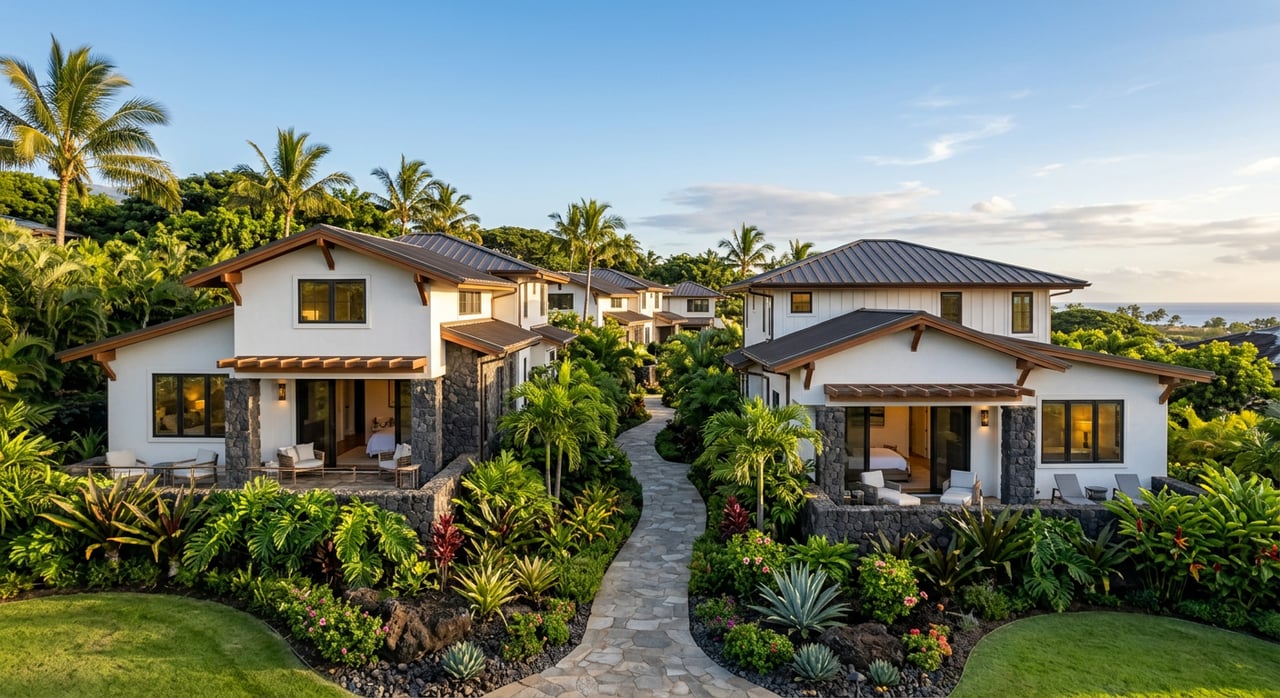
- What to expect: Primarily condominiums and townhomes with resort-style pools, fitness areas, and owner or beach club access. Some gated single-family or estate options exist.
- Ownership and fees: Most resorts use condominium associations (AOAO). Monthly dues can be significant because they cover common-area care, exterior maintenance, and amenities. Always review CC&Rs, house rules, and any club fees before you write an offer.
- Rhythm and neighbors: Expect a mix of owners and visitors. Resorts are designed for convenience with shops, dining, and events close by.
Waikōloa Village
- What to expect: A planned residential community uphill from the coast with single-family homes, townhomes, and several condo complexes. The Waikōloa Village Association (WVA) manages community rules and amenities. Learn more about the association’s role on the WVA overview page at the Association site: Waikōloa Village Association.
- Dues and amenities: Instead of high monthly resort HOA dues, WVA charges an annual fee that supports community amenities. For 2026, WVA published full annual dues of $1,120 on its payment page. You can review dues information and payment details through WVA’s payment portal.
- Neighborhood feel: The Village is largely owner-occupied or long-term rentals, with a residential pace and cooler trade-wind exposure than the coast.
Short-term rental rules you must know
Hawai‘i County regulates short-term vacation rentals under Bill 108 and Planning Department Rule 23. Resorts are often in zones where new STVRs are allowed, while Waikōloa Village has relatively few STVRs and more long-term residents. Before assuming rental income, confirm eligibility by Tax Map Key (TMK), current registration or Nonconforming Use Certificate (NUC), and association rules. Start with the County’s guidance at the Short-Term Vacation Rentals page: Hawai‘i County Planning Department STVRs.
Key checks for any property:
- Is the zoning a permitted STVR district or does the property hold a valid NUC?
- Does the AOAO or WVA allow short-term rentals, and under what conditions?
- If a unit is marketed as a vacation rental, does it have an active registration number and verifiable rental history?
Lifestyle and amenities
Resort access and walkability
You can walk or take a short drive to shops, dining, and events at the coast. The hubs are designed for convenience, like the shopping, dining, and entertainment at Queens’ MarketPlace. This setup supports a car-light vacation rhythm, with ocean access and golf close by.
Village community benefits
The WVA operates a golf course, tennis and pickleball courts, a modern Aquatic Center, and stables. These amenities help anchor day-to-day life without resort-area pricing. Review programs and details at WVA amenities.
Commute and access from Waimea
From most parts of Waimea, you can typically reach Waikōloa Village in about 20 to 35 minutes. Getting to the coastal resort nodes usually takes about 25 to 40 minutes depending on the exact destination and traffic. The Kona International Airport is often a shorter drive from the resorts than from the Village. Always map the exact addresses you travel most, then test the route at the times you care about.
Taxes, costs, and cash flow
If you plan to operate a short-term rental, you must register for and remit the General Excise Tax (GET) and the Transient Accommodations Tax (TAT). The state has adjusted TAT rates in recent years, and counties can add surcharges, so confirm the current requirements with the Department of Taxation at tax.hawaii.gov. Model these taxes, plus HOA or WVA dues, utilities, property taxes, and any club fees into your budget. Effective taxes and carrying costs can materially change your net yield.
Hazards, insurance, and financing
Lenders and insurers will require hazard checks on the Big Island. Early in your search, verify lava zone, flood zone, and any tsunami exposure, and get quotes from insurance brokers for premiums and availability. The USGS Hawaiian Volcano Observatory provides mapping resources for understanding island hazards at USGS HVO multimedia and maps. Your due diligence should also include a conversation with your lender on how hazard zones may affect financing.
Schools and healthcare context
If school proximity or healthcare access influences your choice, note these anchors in Waimea:
- Schools: Waimea hosts well-known private options like Hawai‘i Preparatory Academy and Parker School. Map attendance areas for public schools based on your exact address.
- Healthcare: Queen’s North Hawai‘i Community Hospital serves the region from Waimea. Learn more through this local overview of Queen’s North Hawai‘i Community Hospital.
Resort vs. Village: side-by-side takeaways
- Housing types: Resorts lean condo and villa living, often furnished and amenity-rich. The Village offers single-family homes and condos in a residential setting.
- Association structure: Resorts use project-level AOAOs with significant monthly dues. The Village centralizes amenities through WVA with one annual fee.
- Rental path: Resorts often allow STVRs subject to zoning and AOAO rules. Village STVRs are less common; always confirm eligibility with Hawai‘i County and association rules.
- Daily rhythm: Resorts are visitor-oriented and walkable to coast amenities. The Village feels neighborhood-based with community recreation and cooler evenings.
- Commute: Both are within a typical half-hour drive of Waimea, with the resorts closer to KOA.
A 6-question checklist for tours
Bring this list when you view properties:
- Zoning and STVR status: What is the property’s TMK and current STVR registration or NUC status? Confirm with the County’s STVR resources.
- Association rules and dues: What are the current AOAO or WVA dues, and what do they include? Ask for CC&Rs, house rules, meeting minutes, budgets, and reserve studies.
- Extra fees: Are there separate club, beach club, or utility base charges not in the main dues?
- Parking and storage: How many stalls, EV policies, and where do you store bikes, boards, or beach gear?
- Walkability and access: How far is it to shops, dining, and ocean access, and how busy is it at peak times?
- Hazards and insurance: What are the lava and flood zones, and what do insurance quotes look like for this address?
Day-in-the-life examples
- Resort owner workday: School or work in Waimea, return to the coast for an evening beach walk and dinner by the shops. Expect more visitor activity and higher HOA dues in exchange for a vacation-centric setting.
- Village homeowner routine: Quick Waimea commute, after-school time at the Aquatic Center or the Village Course, then a short weekend drive to beaches. Expect a residential pace and a single WVA fee rather than resort-level monthly dues.
How to decide in 3 steps
- Clarify your must-haves. Rank commute, walkability, beach access, home type, and rental goals. Be honest about which tradeoffs matter most.
- Stress-test your budget. Model total carrying costs including AOAOs or WVA dues, utilities, property taxes, and if relevant, GET and TAT. Use conservative occupancy and rate assumptions for any STVR plan.
- Verify rules and risks. Pull association documents, confirm STVR status with the County, check hazards, and visit at varied times to experience noise, traffic, and microclimate.
Choosing between South Kohala’s resort cores and Waikōloa Village comes down to lifestyle and math. If you want turn-key amenities and potential rental income, resorts may fit. If you want a neighborhood feel and lower ongoing dues, the Village often delivers strong value. Wherever you land, local guidance shortens the learning curve and helps you buy with clarity.
Ready to compare real listings side by side, confirm rules, and run the numbers? Connect with the team at Kona Pacific Realty, LLC for a warm, local-first approach to your South Kohala search.
FAQs
What is the main difference between Waikōloa Village and Kohala Coast resorts?
- Resorts center on condos and walkable access to beaches, shops, and dining, while Waikōloa Village is a residential community with single-family homes, condos, and WVA-run amenities.
Are short-term rentals allowed in Waikōloa Village?
- Short-term rentals are comparatively rare in the Village; confirm zoning, any existing registration or NUC, and WVA or condo rules using the County’s STVR guidance.
How much are association fees in Waikōloa Village vs. resorts?
- WVA published full annual dues of $1,120 for 2026, while resort condos often charge higher monthly AOAO dues tied to amenities and maintenance; always verify current figures with the association.
How long is the drive from Waimea to Waikōloa Village and to the resorts?
- Typical drives range from about 20 to 35 minutes to the Village and 25 to 40 minutes to resort areas, depending on your exact start and finish points and traffic.
What taxes apply if I rent my condo short term on the Kohala Coast?
- You must register and remit the state GET and TAT, and account for any county surcharges; confirm current rules and rates with the Department of Taxation at tax.hawaii.gov.